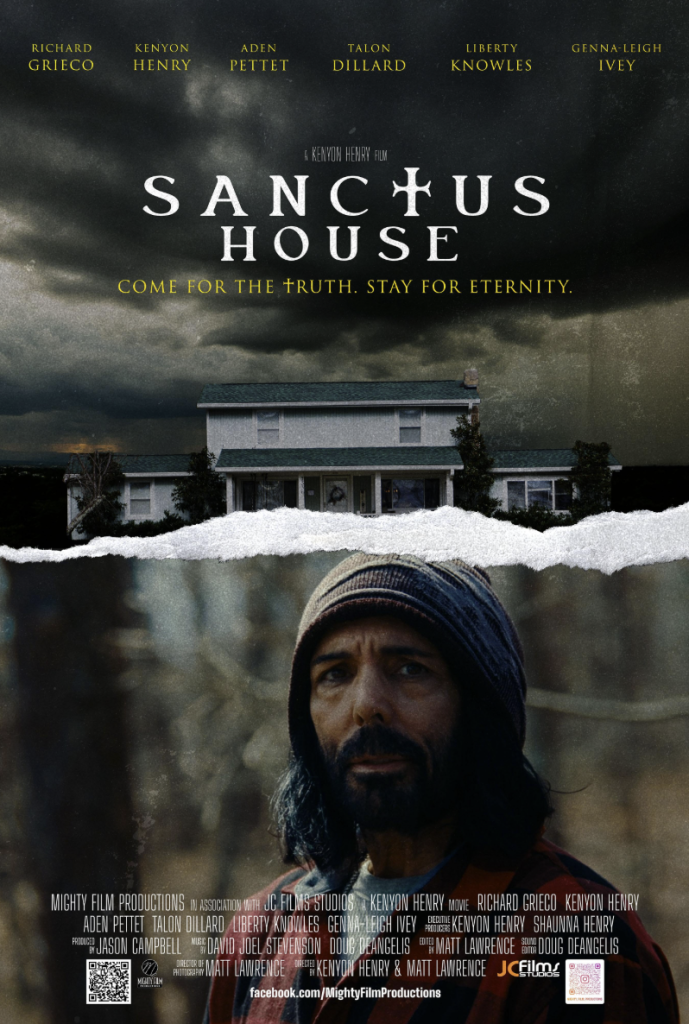
There’s something refreshing about a horror film that doesn’t feel the need to shout. Sanctus House is a restrained, atmospheric indie horror that leans into mood, composition, and implication rather than excess. While its compact runtime and fragmented structure won’t work for everyone, the film delivers a thoughtful, eerie experience anchored by strong visuals and a quietly unsettling premise.
Spoiler-Free Summary
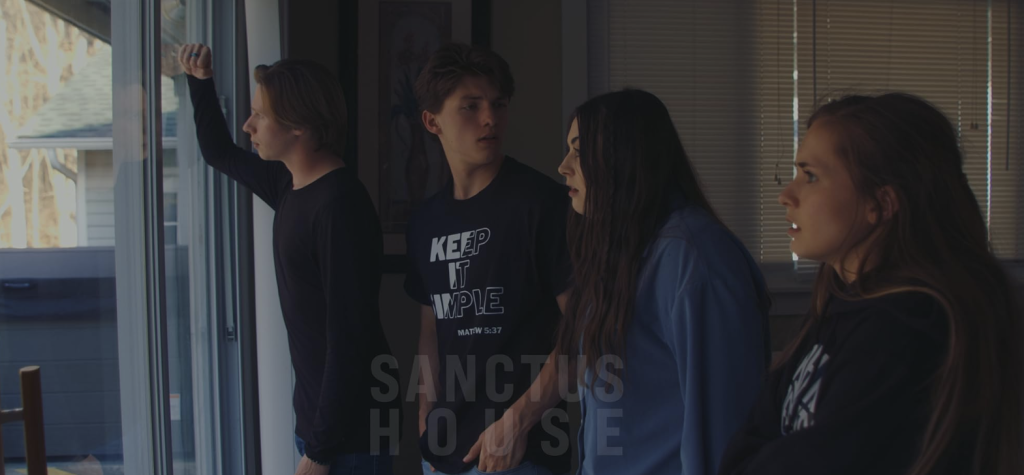
A group of college students travels to a remote, ominous house to investigate a local legend, unaware that the property’s history is more than folklore. As the night unfolds, the house reveals an invisible presence tied to belief, legacy, and unresolved violence. What begins as research quickly turns into confrontation — not just with the supernatural, but with the characters’ own assumptions about faith, fear, and consequence.
“Sanctus House understands that what you don’t see is often far more terrifying than what you do.”
Review
One of Sanctus House’s most noticeable qualities is its runtime. At just over an hour, the film feels unusually short for a feature, and that brevity is a double-edged sword. On one hand, the story never drags; on the other, certain character dynamics feel compressed, giving the film a fragmented rhythm. Still, it’s clear that the filmmakers present everything the audience needs, even if some connective tissue is intentionally minimal.
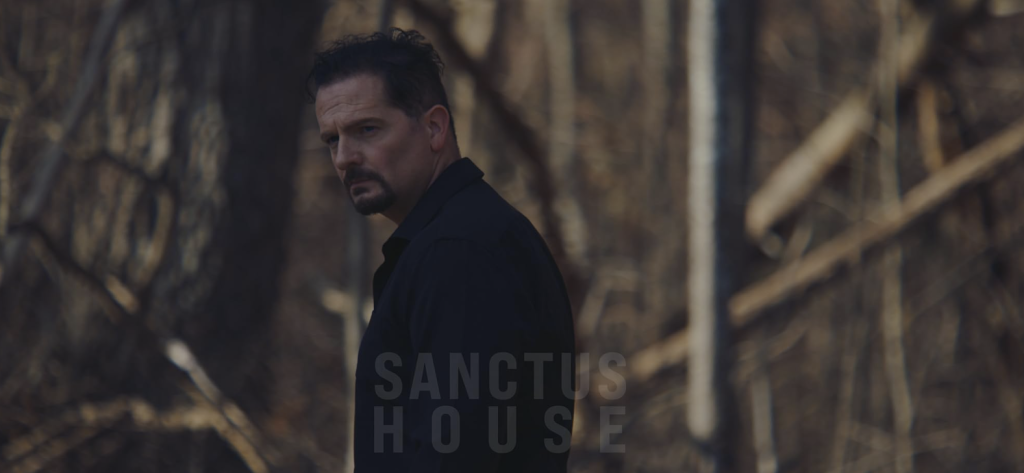
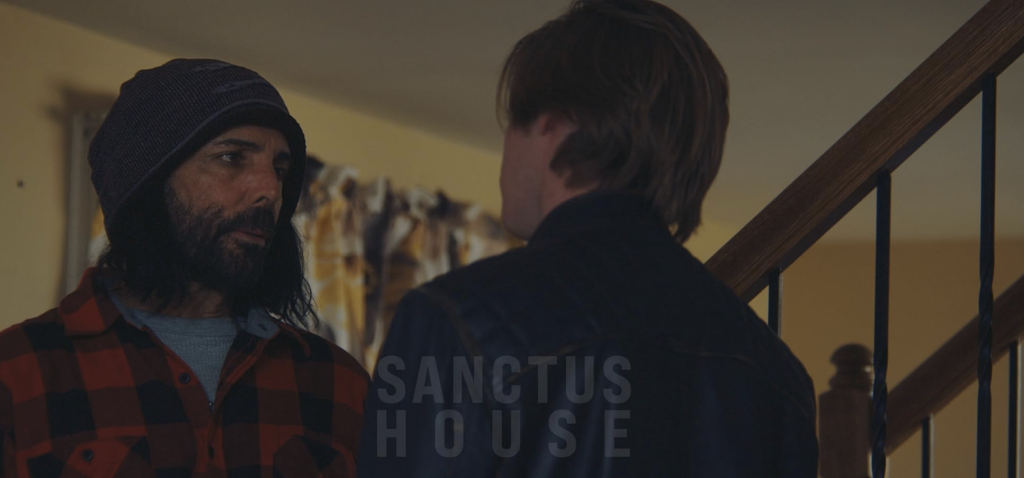
Visually, the film excels. The tilt-shift effect is used sparingly but effectively, subtly destabilizing the frame and reinforcing the idea that something is “off” long before the horror escalates. The cinematography is a standout, creating strong atmosphere with limited locations and leaning heavily on composition, lighting, and negative space rather than spectacle.
Performance-wise, the cast largely works, with Richard Grieco’s presence adding weight and familiarity. His role grounds the film, offering a calm, unsettling counterpoint to the younger ensemble. While most performances feel committed, some early character moments — particularly a “comfort food” scene meant to establish emotional vulnerability and setup the dread — feel heavy-handed and slightly awkward in execution.
Later, a heated kitchen argument introduces dialogue that doesn’t entirely align with established character arcs. A specific line — “That man has a name” — lands strangely within the context of the story, feeling more symbolic than earned. These moments don’t derail the film, but they do stand out against its otherwise controlled tone.
“A solid, stylish horror film that nearly hits the mark, elevated by atmosphere and smart restraint.”
Where Sanctus House truly shines is in its handling of the invisible entity. Rather than relying on visual effects or jump scares, the film builds fear through absence — reactions, sound design, and the sense of something watching from just outside the frame. These scenes are among the film’s most effective and demonstrate a clear understanding of restraint-driven horror.
Themes: Is This a Religious Horror Film?
While Sanctus House flirts with religious and spiritual themes, it never becomes preachy. Faith, belief, and ritual exist as undercurrents rather than overt messages. The film works perfectly well as a straight supernatural horror, allowing viewers to engage with its ideas on their own terms. This subtlety is a strength — it invites interpretation rather than dictating meaning.
“The film works perfectly well as a straight supernatural horror, allowing viewers to engage with its ideas on their own terms”
Final Verdict
Sanctus House is a visually confident, mood-driven indie horror that prioritizes atmosphere over excess. While its short runtime and occasional dialogue missteps keep it from fully realizing its potential, the film succeeds where it matters most — creating dread, sustaining tension, and trusting the audience to lean in.
For fans of restrained, psychological horror with strong cinematography and an interesting premise, this is well worth a watch.
The Review
Sanctus House (2026)
3.8Score
Sanctus House (2026) is a visually confident, mood-driven indie horror that prioritizes atmosphere over excess. While its short runtime and occasional dialogue missteps keep it from fully realizing its potential, the film succeeds where it matters most — creating dread, sustaining tension, and trusting the audience to lean in.
Jason’s storytelling roots extend beyond film into publishing as a contributor to The Darkside of Acting Up: A Collection of Plays (Volume One) and The Darkside of Acting Up: Volume Two.
When he’s not making or reviewing movies, he co-hosts Speakeasy Noir Cast with Carly Street—a noir-soaked show that pairs classic Film Noir and Neo-Noir conversations with the mood of a back-alley speakeasy.